 By Jackton Nero
Mastering personal style often comes down to the details. While a great outfit provides a solid foundation, the way you accessorize elevates your look from standard to standout. Among the most popular and enduring trends in modern fashion is the art of layering jewelry. Layering allows you to combine multiple pieces of jewelry simultaneously, creating a rich, textured, and deeply personalized aesthetic.
When done correctly, layering looks effortless, intentional, and high-end. However, there is a fine line between a beautifully curated stack and a cluttered, tangled mess. Striking the perfect balance requires an understanding of proportion, spacing, texture, and focal points. This guide will break down the essential techniques for layering necklaces, bracelets, rings, and earrings to help you achieve a polished, fashion-forward appearance.
The Core Fundamentals of Layering
Before focusing on specific body areas, it is vital to understand the universal principles that govern successful jewelry curation. These concepts prevent your accessories from overwhelming your outfit or clashing with one another.
Establish a Common Denominator
To ensure your layered jewelry looks cohesive, look for a unifying element that ties the pieces together. This common denominator could be a shared metal finish, a recurring gemstone color, or a consistent design motif like geometric shapes. While mixing elements is highly encouraged, having at least one consistent thread prevents the collection from looking accidental.
Play with Varied Weights and Textures
If every piece of jewelry you layer looks exactly the same, the final result will lack depth. Visual interest comes from contrast. Pair a delicate, whisper-thin chain with a chunky, heavy curb link. Combine a smooth, polished metal band with a textured, hammered ring. This interplay of light and texture gives your look dimension and prevents the jewelry from blending into a single, flat mass.
Consider Your Clothing as the Canvas
Your jewelry should never fight with your clothes. The neckline of your top, the length of your sleeves, and the pattern of your fabric dictate how you should layer. Plain, neutral, and monochromatic fabrics provide an excellent blank canvas for complex layers. Conversely, if you are wearing busy prints or intricate ruffles, simplify your jewelry stacks to avoid visual chaos.
Mastering the Necklace Stack
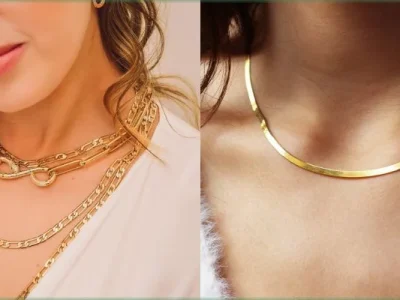
The neck is often the focal point of an ensemble, making necklace layering one of the most effective ways to transform an outfit. The key to a successful necklace stack is managing the spacing between pieces to prevent tangling.
The Ideal Three-Step Formula
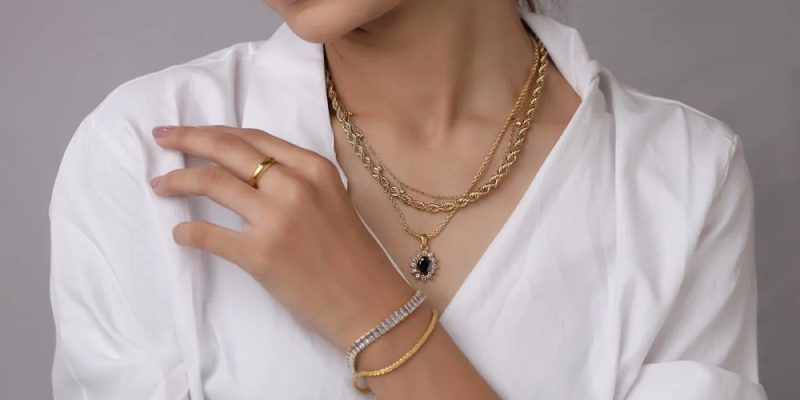
A foolproof way to build a balanced necklace stack is to use the three-piece rule, ascending in length and visual weight.
-
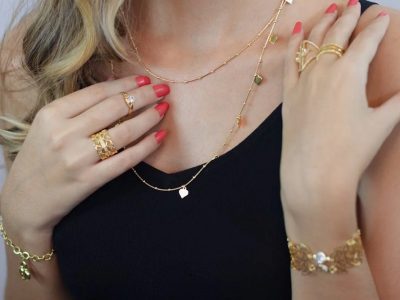
The Anchor Piece: This is your shortest layer, typically a sixteen-inch chain or a choker. It sets the boundary for the rest of the stack. A delicate chain or a string of tiny beads works beautifully here.
-
The Textural Mid-Layer: Positioned at eighteen inches, this layer should contrast with the anchor piece. Choose a medium-weight chain with a distinct texture, such as a herringbone, paperclip, or rope design.
-
The Statement Pendant: The final layer sits at twenty to twenty-four inches. This piece should feature a substantial pendant, medallion, or crystal that draws the eye downward, creating an elegant vertical line that elongates your torso.
By keeping roughly two inches of space between each layer, you minimize the risk of the chains wrapping around one another throughout the day.
Building the Ultimate Ring Stack
Rings offer incredible versatility because you have ten fingers to work with. Ring stacking allows you to mix metals, play with symmetry, and express your personal style through your hand gestures.
Strategies for Harmonious Ring Stacking
-
Vary the Thickness: Mix ultra-thin wire bands with chunky signet rings or thick band styles. Placing a thick ring at the base of your finger and stacking thinner bands on top creates a balanced, grounded look.
-
Utilize Midi Rings: Do not confine your jewelry to the base of your fingers. Midi rings sit above the knuckle, adding unexpected visual interest and breaking up the traditional look of a ring stack.
-
Leave Breathing Room: Avoid putting heavy stacks on every single finger, which can look restrictive and make it difficult to move your hands. If you build a dramatic stack on your index finger, leave your middle finger bare, and place a simple, singular band on your ring finger.
A balanced hand stack often features an asymmetrical layout. For instance, you might heavily decorate one hand while keeping the other relatively minimal, creating an effortless, curated vibe.
Curation for the Perfect Ear Party
With the rise of multiple ear piercings, curating an ear party has become a major style statement. Layering earrings requires a strategic approach to scale, moving from largest to smallest.
The Hierarchy of the Ear
-
The First Lobe: This is the foundation of your ear stack. Because the lobe is the largest area, it should host your heaviest or most dramatic piece, such as a prominent hoop, a drop earring, or a large gemstone stud.
-
The Second and Third Lobes: As you move up the ear, the scale of the jewelry should gradually decrease. Transition from your primary statement earring into smaller huggie hoops or mid-sized studs.
-
The Cartilage and Helix: The upper portions of the ear are best suited for delicate, minimalist pieces. Tiny flat-back studs, dainty cuffs, or seamless clicker rings add the final touch of sparkle without crowding the ear.
If you do not have multiple piercings, you can easily replicate this look by utilizing clip-on ear cuffs that grip the cartilage securely without requiring a needle.
Creating the Perfect Arm Party
Layering bracelets is an excellent way to add movement and sound to your personal style. A well-curated wrist stack can make a simple sweater or long-sleeved shirt look instantly fashionable.
Balancing Bracelets and Cuffs
-
Start with a Rigid Base: Begin your stack with a structured bangle or a solid metal cuff. This acts as the anchor and keeps the rest of the bracelets from sliding too far down your wrist.
-
Add Fluidity: Layer fluid chain bracelets, tennis bracelets, or beaded strands next to the rigid cuff. The movement of the chains against the solid metal creates a beautiful tactile contrast.
-
Incorporate a Timepiece: A classic leather or metal-link watch can serve as the ultimate focal point for a bracelet stack. Layer your bracelets behind the watch face to keep the timepiece clearly visible.
Ensure that the bracelets you choose are relatively close in size so they do not slide over one another and cause damage, particularly if you are mixing delicate gemstones with hard metals.
Frequently Asked Questions
What is the best way to keep layered necklaces from tangling while wearing them?
To reduce tangling, mix chains of different weights and styles. For example, pair a flat herringbone chain with a round cable chain, as different shapes resist clinging to one another. You can also invest in a necklace detangler clasp, which is a small metal separator that holds multiple chains at fixed intervals and fastens with a single closure at the back of your neck.
Is it fashionable to mix gold and silver jewelry in the same stack?
Mixing gold and silver is highly fashionable and gives off a modern, confident vibe. To make the mix look cohesive, ensure you combine the metals within the same stack rather than keeping one hand silver and one hand gold. A two-tone piece, such as a watch or a ring that naturally contains both metals, is an excellent anchor to unite the look.
How do I clean a stacked set of rings that contains different types of gemstones?
Because different gemstones have varied hardness levels, use the gentlest method possible. Soak your rings in warm water mixed with a few drops of mild, chemical-free dish soap. Use a very soft-bristled toothbrush to gently clean around the settings. Avoid harsh ultrasonic cleaners, which can crack softer stones like opals, pearls, or emeralds.
Can I layer jewelry if I am wearing a heavily patterned or sequined top?
When wearing a highly patterned or embellished top, it is best to tone down your necklace layering to avoid visual clutter. Instead, shift your layering efforts to your wrists and fingers, or create a curated ear stack. This allows you to embrace the layering trend without competing with the intricate details of your clothing fabric.
How do I choose the right size midi rings so they do not slide off my fingers?
Midi rings are typically sized three to four sizes smaller than your standard ring size for that finger. To ensure a secure fit, the ring should slide over the top knuckle with slight resistance and sit comfortably in the middle of the phalanx. Opt for adjustable or slightly malleable bands if you are unsure of your exact measurement.
Should I layer jewelry on both my wrists and my neck simultaneously?
While you can layer in multiple areas, it is best to choose one primary zone to avoid looking over-accessorized. If you are showcasing a dramatic, multi-layered necklace stack, keep your wrists simple with a single watch or cuff. If your neckline is bare and minimal, feel free to build an elaborate, eye-catching arm party.