
 By Jackton Nero
The smoothness, safety, and control of a vehicle depend heavily on its suspension and steering systems. These systems work together to maintain tire contact with the road, absorb shocks, and ensure predictable handling during driving. When either system fails, it affects not only comfort but also the overall drivability and safety of the car. Understanding how auto repair shops handle suspension and steering issues provides insight into the precision and expertise required to diagnose and repair these complex systems.
Understanding the Suspension System
The suspension system connects a vehicle’s body to its wheels, allowing controlled motion and stability. It includes critical components such as:
- Shocks and struts
- Springs
- Control arms
- Ball joints
- Sway bars and bushings
Each part plays a vital role in balancing comfort with control. Over time, wear and tear from daily driving, rough roads, and weather exposure lead to degradation, causing noticeable problems like uneven tire wear, vibration, or instability.
Common Signs of Suspension Problems
Auto repair shops are trained to identify several symptoms that point to suspension issues:
- Bouncing or dipping: Excessive bouncing after hitting a bump indicates worn shocks or struts.
- Uneven tire wear: Often a sign of misaligned suspension geometry or damaged components.
- Pulling to one side: Suggests misalignment, broken control arms, or faulty bushings.
- Clunking or rattling noises: Usually caused by loose joints, failing struts, or damaged sway bar links.
- Poor handling or drifting: Indicates weakened components affecting steering precision.
When a vehicle shows these symptoms, repair technicians conduct thorough inspections before replacing any parts.
How Technicians Diagnose Suspension Issues
Auto repair shops follow a structured process to diagnose suspension problems. This systematic approach ensures they identify the root cause rather than just treating surface symptoms.
1. Visual Inspection
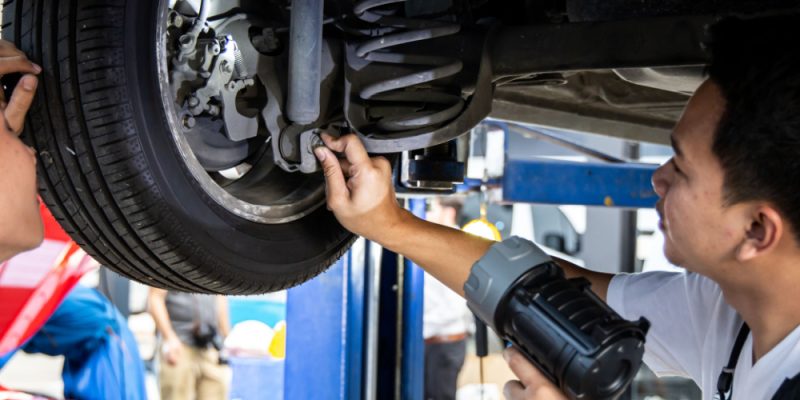
Technicians begin with a comprehensive visual check, looking for oil leaks on shocks or struts, cracks in bushings, and corrosion or damage on metal components. They also check for uneven tire wear, which often signals deeper alignment or suspension faults.
2. The Bounce Test
This quick yet effective test helps assess the shock absorber condition. The mechanic pushes down on each corner of the car and observes how many times it bounces. If it rebounds more than twice, it’s a clear indicator that the shocks are worn.
3. Digital and Mechanical Diagnostics
Modern repair shops use factory-level diagnostic tools and digital oscilloscopes to measure sensor data, suspension height, and real-time vibration feedback. Advanced alignment machines measure caster, camber, and toe angles precisely, ensuring every component aligns with manufacturer specifications.
Modern garages now use high-tech tools to get the most accurate readings possible. These systems use sensors and cameras to track the exact position of each wheel in real-time. Many shops invest in computerised wheel alignment equipment to make sure the measurements match the factory settings for that specific car model. This technology helps mechanics find even small errors that the human eye cannot see. Using these digital systems makes the job faster and more reliable for the customer. It also helps the shop provide a detailed report of the before and after results.
4. Test Drives and Road Simulations
After preliminary checks, technicians perform controlled test drives or use road simulation equipment to recreate driving conditions. This allows them to feel the steering feedback, note vibrations, and confirm the presence of suspension noises or instability.
Steering System: The Other Half of Vehicle Control
The steering system enables the driver to direct the vehicle precisely. Most modern vehicles use either rack-and-pinion or recirculating ball systems, with power assistance from hydraulic or electric pumps.
Key Steering Components
- Steering wheel and column
- Tie rod ends
- Rack and pinion assembly
- Power steering pump or motor
- Steering linkage and bushings
If any of these components wear out, steering responsiveness deteriorates, making it harder to maintain lane control or respond quickly to obstacles.
Diagnosing Steering System Issues
Auto repair shops rely on both manual expertise and digital calibration tools to handle steering system repairs.
1. Checking Fluid and Power Assist Systems
For hydraulic systems, technicians inspect the power steering fluid level and condition. Dark, contaminated, or low fluid can cause whining noises or stiff steering. Leaks are traced back to hoses, seals, or the steering rack.
2. Inspecting Tie Rods and Linkages
Technicians use mechanical leverage tools to check tie rod end play and linkage looseness. Excessive movement can cause wobbling, vibrations, and misalignment. Replacing tie rods requires precision to ensure proper toe alignment after installation.
3. Steering Column and Rack Assessment
Modern shops employ steering angle sensors to detect improper feedback or misalignment. For vehicles equipped with electric power steering, diagnostic scanners access error codes to identify motor or sensor malfunctions.
4. Alignment and Calibration
Once repairs are made, a four-wheel alignment is mandatory. Alignment systems adjust caster, camber, and toe to factory settings, ensuring the steering wheel is centered, tire wear is even, and handling feels stable.
Common Suspension and Steering Repairs
Auto repair shops encounter a wide range of suspension and steering repairs, varying in cost and complexity. Some of the most common include:
- Shock or Strut Replacement: Worn shocks cause poor damping and control; replacement typically restores ride comfort and stability.
- Control Arm and Ball Joint Replacement: Essential for maintaining proper wheel motion and alignment.
- Bushing Replacement: Eliminates clunks, squeaks, and excessive vibration.
- Tie Rod Replacement: Restores precise steering response.
- Rack and Pinion Repair or Replacement: Corrects fluid leaks and restores steering feel.
- Wheel Alignment: Ensures all suspension geometry angles meet OEM standards.
Each repair type requires specialized tools, precise torque measurements, and test drives to verify success.
The Role of Technology in Modern Suspension and Steering Repairs
Today’s vehicles are equipped with advanced driver-assistance systems (ADAS), making suspension and steering repairs more complex. Modern shops use calibration stations and laser-based alignment systems to ensure all safety sensors, including lane-keeping and adaptive cruise control, work properly after repairs.
Additionally, digital chassis scanners measure minute deviations in frame structure. This technology ensures even the smallest bend or misalignment doesn’t affect suspension geometry or steering response.
Integration with Electronic Systems
Electric Power Steering (EPS) systems require software calibration after repairs. Technicians often update ECU software or reset steering angle sensors to match new mechanical alignments. Failure to do so can cause steering drift or incorrect driver-assist behavior.
Preventive Maintenance and Inspections
Proper maintenance can prevent costly suspension and steering repairs. Auto repair shops recommend the following:
- Inspect suspension components every 12,000 miles or annually.
- Rotate tires and check wheel alignment regularly.
- Flush and replace power steering fluid every 50,000 miles.
- Listen for noises during steering or over bumps—early detection saves money.
- Replace worn shocks and struts at the first sign of oil leakage or poor damping.
Preventive care ensures extended component life and sustained ride quality.
Real-Life Example: Handling a Complete Suspension Overhaul
A mid-size sedan with 120,000 miles arrived at an auto shop exhibiting poor handling and uneven tire wear. The technicians conducted a digital inspection revealing worn struts, damaged control arm bushings, and a misaligned rear axle. The repair process involved:
- Removing the old struts and installing OEM replacements.
- Replacing control arm bushings and recalibrating the suspension angles.
- Performing a four-wheel digital alignment.
- Completing a test drive to verify comfort and stability.
After the overhaul, the car’s handling improved dramatically, demonstrating how detailed diagnostics and professional expertise restore performance.
Why Professional Repair Matters
Attempting DIY suspension or steering repairs can be dangerous without proper equipment. Certified mechanics have hydraulic lifts, digital scanners, and precision torque tools necessary for safe, accurate work. Moreover, professional shops follow OEM specifications, ensuring that the vehicle’s handling and safety systems remain intact.
Shops also provide warranty-backed services, meaning if an issue reoccurs, it’s corrected without additional cost—something home repairs rarely offer.
Frequently Asked Questions (FAQ)
Q1: How often should suspension and steering systems be inspected?
It’s advisable to inspect both systems at least once a year or every 12,000 miles. However, if you notice unusual noises, uneven tire wear, or poor handling, schedule an inspection immediately.
Q2: What causes premature suspension wear?
Frequent driving on rough roads, overloading the vehicle, or neglecting tire maintenance can accelerate wear on suspension components such as shocks, struts, and bushings.
Q3: Can alignment issues damage suspension parts?
Yes. Misalignment causes uneven stress distribution across suspension components, leading to premature wear on control arms, tires, and joints.
Q4: Is it necessary to align the wheels after replacing tie rods or control arms?
Absolutely. Any component affecting wheel position requires a precise alignment afterward to ensure proper geometry and handling.
Q5: How do electric power steering systems differ from hydraulic ones?
Electric systems use motors and sensors rather than hydraulic fluid. They are more efficient, require less maintenance, and integrate easily with modern driver-assist systems.